
What Is SaaS? A Practical Guide for Growing Businesses

SaaS in simple terms
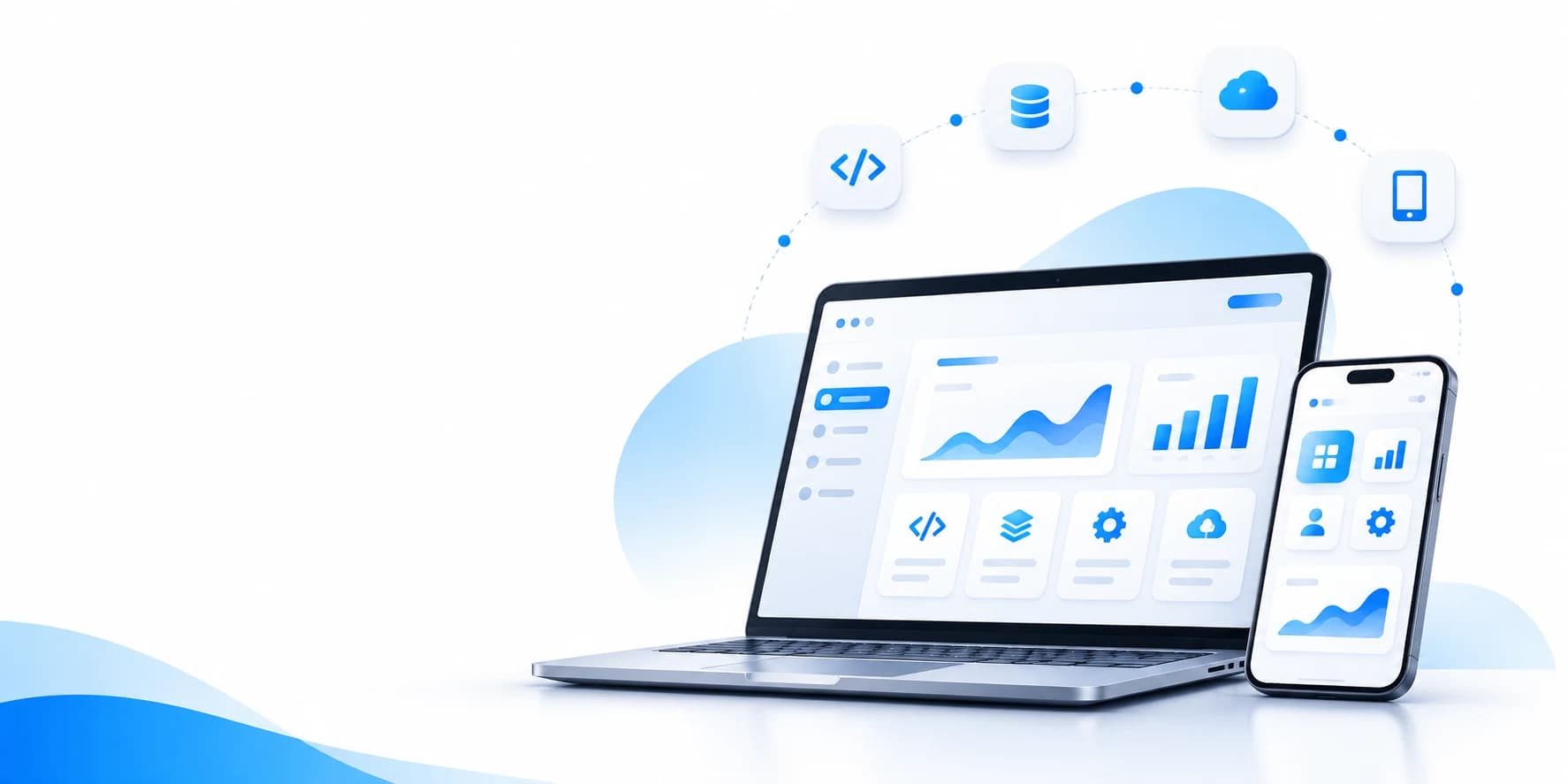
SaaS stands for Software as a Service. It is a way of delivering software over the internet, usually through a web browser or an application. Instead of installing and maintaining the full software stack on local computers, customers access a service hosted and operated by a provider.
Examples of SaaS categories include accounting, customer relationship management, team collaboration, appointment scheduling, inventory management and project tracking. A business typically pays a subscription or another usage-based fee to access the product.
How does a SaaS product work?
The provider operates the application and the infrastructure needed to make it available. Customers create an account, configure their workspace and use the features included in their plan. The provider is generally responsible for product updates and platform operations, while customers remain responsible for using the service appropriately and managing their own users and data access.
Many SaaS products serve multiple customer organisations through a shared application platform. This is often called a multi-tenant model. A well-designed system keeps each customer's data logically separated and applies access controls to every request. Some products use other architectures depending on their security, performance or regulatory requirements.
Why businesses choose SaaS
1. Lower initial infrastructure effort. A business can start using a product without building and operating the entire application environment itself.
2. Access from different locations. Users can often access the service from supported devices and locations, subject to connectivity and account permissions.
3. Centralised updates. The provider can release improvements to the hosted service without asking every customer to install a new version manually.
4. Configurable plans. Products may offer tiers based on users, features, storage or usage. This can help businesses choose a plan that matches their current needs.
5. Faster operational setup. When the product fits the workflow, teams can configure it and begin using it sooner than they could build a system from scratch.
What should businesses consider?
SaaS is not automatically the right option for every process. Before subscribing, review the product's feature fit, user limits, integrations, data export options, support arrangements and service terms.
Understand how the provider handles security, backups, access control and incident communication. Ask where data is stored, how it can be retrieved, what happens when the subscription ends and whether the product supports the business's operational requirements.
Also calculate the cost over time. A low entry plan may have limits that require paid add-ons or a higher tier as the business grows. Consider implementation, training, migration and integration effort—not only the listed subscription price.
SaaS vs custom-built software
A SaaS product is usually a good fit when its standard workflows and configuration options meet the business's needs. It may be less suitable when an essential process is highly specific, when several systems need to work together in a particular way, or when the software itself is part of the organisation's core product.
Custom software gives the organisation more control over features and workflows, but the organisation must plan for development, hosting, maintenance, security and future updates. Some businesses use a combination: SaaS for common functions and custom software for distinctive workflows or integrations.
A checklist before selecting a SaaS product
- Does the product solve the problem we need to address?
- Can it support our users, locations and expected workload?
- Are the required features included in the plan we are considering?
- Can it integrate with the systems we already use?
- What security, backup and access controls are documented?
- Can we export our data in a usable format?
- What support is available and under what terms?
- What will the product cost as usage grows?
Choose the service model that fits the work
SaaS can help businesses access useful software without managing every technical layer themselves. Its value depends on product fit, provider reliability, clear commercial terms and responsible data management.
Evaluate the workflow first, then compare products against practical requirements. Whether you choose an existing SaaS product, custom software or a combination, the objective is the same: make business operations more consistent and easier to manage.
Next step
Exploring a software product or planning to build one? Discover BackTech's SaaS Product Development service.
Let’s Work Together
Have an Idea? Let’s Build It.
Tell us about your project, and our team will help you turn it into a scalable, real-world solution.
- Quick Response
- Expert Team
- Reliable Delivery